
Choosing the right design lamps is an art that completely transforms home lighting, giving it personality and functionality. At The Lumine, we understand that every space has specific lighting needs, from the cosy warmth of the living room to the precise functionality of a reading nook. The choice lies not only in aesthetics, but also in the correct height, the desired light intensity and the decorative effect we want to achieve. Good lighting planning can enhance architecture, create enveloping atmospheres and improve the quality of life in your home.
Often, we focus on furniture layout or colour choice, but home lighting plays a role just as crucial as these elements. Modern lamps are not mere objects, but tools that define the atmosphere of each room. For this reason, in this guide from The Lumine, we will reveal the secrets to choosing lamps that not only decorate, but also fulfil their function perfectly, ensuring every room has the ideal light.
Strategic Lighting for Your Living Room: The Heart of the Home
The living room is undoubtedly the epicentre of social and family life at home, a space that demands versatile and welcoming lighting. To achieve this balance, it is essential to combine different types of light sources. A design ceiling lamp, such as a pendant lamp or a modern flush mount, can serve as the main focal point, providing a general light that floods the entire space. It is important that this light be dimmable in intensity to adapt to different moments, from a lively gathering to a quiet evening.
Complementing the general lighting with floor lamps and table lamps is key to creating light layers and zones of interest. A floor lamp placed next to the sofa or in a corner can provide a soft and warm ambient light, ideal for reading or for generating a point of intimacy. Table lamps, on the other hand, are perfect for side tables, consoles or shelving, adding touches of decorative and functional light that avoid unwanted shadows and enhance the decor.
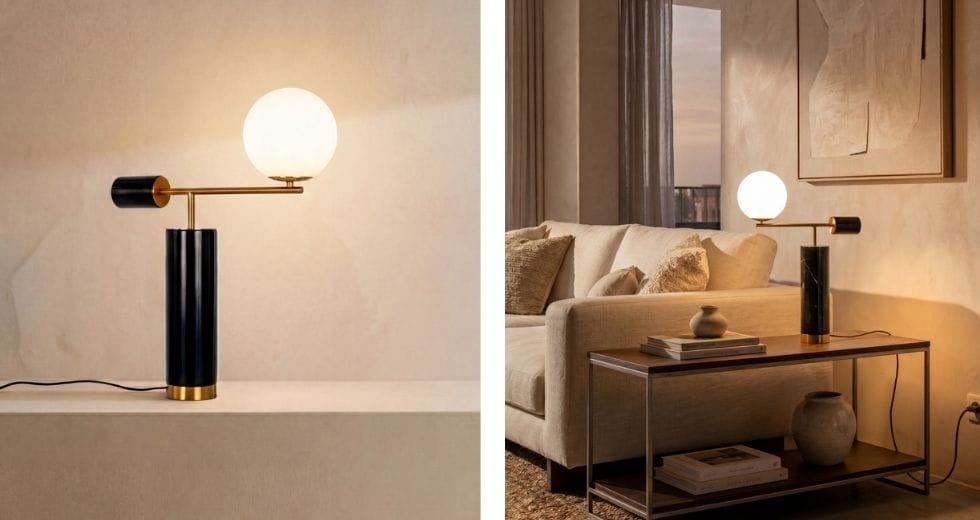
Consider the height of the lamps in relation to the furniture. Ceiling lamps should hang at a height sufficient not to obstruct passage, generally between 2.10 and 2.30 metres from the floor, depending on the ceiling height and the size of the room. Floor lamps should project their light so that they illuminate the reading area or seating area without dazzling. The decorative effect is enhanced by choosing designs that harmonise with the overall style of the living room, whether modern lamps, minimalist or with an industrial touch, always seeking the quality of materials such as metal, glass or wood.
The light intensity in the living room should be comfortable, generally oscillating between 150 and 300 lux for general light, but allowing it to be lowered to more intimate levels. Opting for warm light bulbs (between 2700K and 3000K) will foster a sense of comfort and relaxation. At The Lumine you will find a wide range of solutions, from iconic design lamps to more discreet but equally effective options, designed to turn your living room into a truly cosy and stylish space.
Bedroom: Sanctuary of Rest and Intimate Atmosphere
The bedroom is an intimate space dedicated to rest and disconnection, so its home lighting should prioritise creating a serene and relaxing atmosphere. The main ceiling lamp should offer a soft and enveloping light, avoiding direct intensity that may disturb the calm. Discreet flush mounts or pendant lamps with a subtle design are excellent options, always with the possibility of regulating their intensity to adapt it to different needs, from dressing the room to reading in bed.
Bedside lamps are an essential element in any bedroom. Whether table lamps placed on the nightstands or wall sconces on each side of the bed, their main function is to provide focused light for reading without disturbing whoever is sleeping. It is important that these lamps allow directing the light downwards or towards the book, and that their design complements the overall aesthetic of the room, adding a decorative touch.
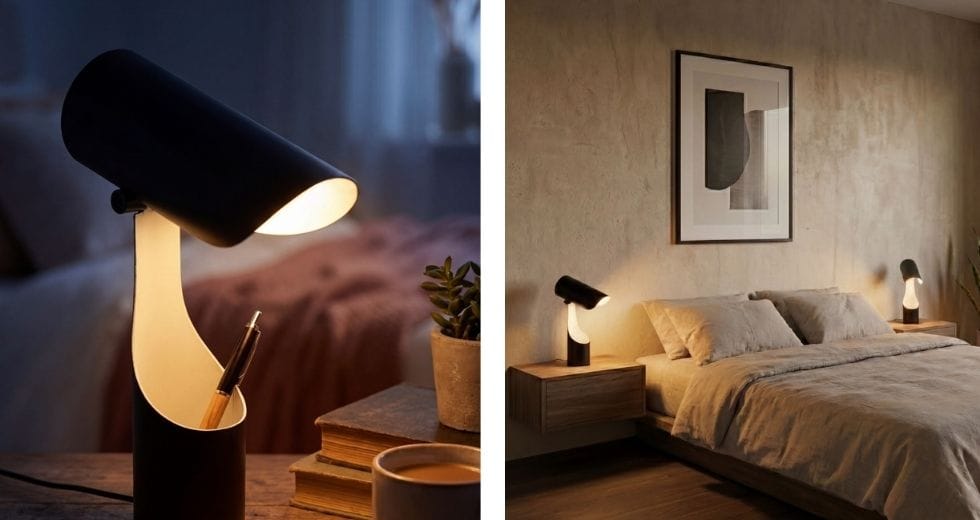
Besides bedside lamps, consider adding a floor lamp in a corner or indirect light behind the headboard to create a more sophisticated and warm atmosphere. Accent lighting, through small recessed lights or hidden LED strips, can enhance decorative elements such as paintings or the architecture of the space itself. The height of the lamps in the bedroom should be functional; bedside lamps should not exceed the height of the mattress to avoid glare, and ceiling lamps should be high enough not to get in the way.
Entrance Hall and Hallways: First Impressions Count
The entrance hall is the calling card of your home, the first space your guests see, so its home lighting should be welcoming, functional and reflect your personal style. A well-chosen ceiling lamp can make all the difference. If the hall is spacious, a design pendant lamp or a modern chandelier can become a sculptural piece that catches the eye. For smaller spaces or low ceilings, an elegant flush mount or discreet wall sconces are more practical solutions.
Hallways, often forgotten, require adequate lighting to ensure safety and create a pleasant transition between rooms. Home lighting in long, narrow hallways benefits from a series of wall sconces or recessed lamps in the ceiling, distributed at regular intervals. This not only lights the way, but can also visually widen the space and add a touch of style, functioning as a decorative element in itself.
To add warmth and depth, consider incorporating table lamps on consoles or sideboards in the hall, or even floor lamps if space allows. These secondary light sources create a more intimate atmosphere and avoid the monotony of a single central light. The decorative effect can be enhanced by directing the light towards architectural or decorative elements, such as mirrors or paintings, using design lamps with careful finishes, such as brass or nickel.
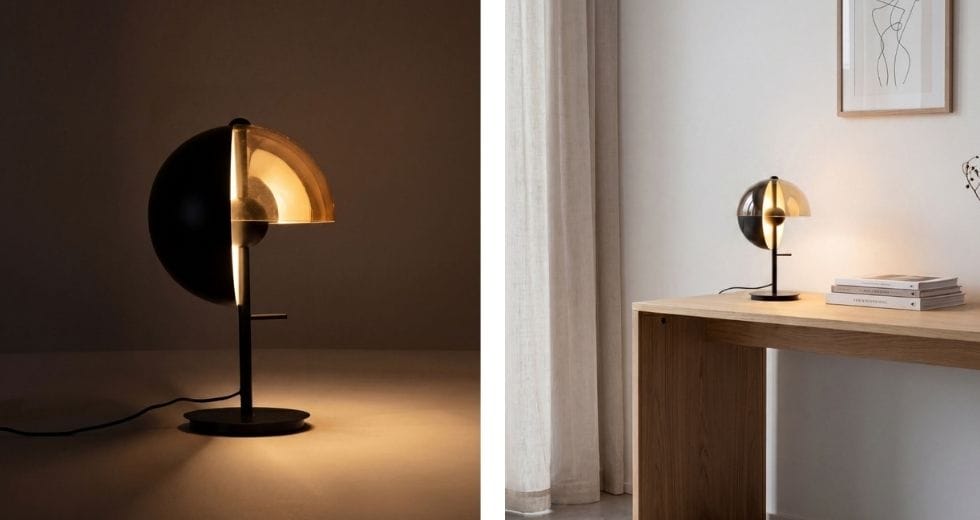
The height of the lamps in these areas should be functional and safe. Pendant lamps in spacious halls should be at a height that does not interfere with passage (around 2.10-2.30m from the floor). Wall sconces should be installed at a comfortable height, generally at eye level (between 1.50m and 1.70m from the floor), and recessed lights in hallways should ensure uniform light coverage. The light intensity in halls and hallways can vary, but a general light of 150-200 lux is usually sufficient, preferably in warm tones to create a welcome.
Reading Nook: Functional Light and Cosy Atmosphere
A reading nook is a personal oasis where home lighting must be eminently functional, but without renouncing comfort and style. The key here is direct, focused light over the reading area to avoid eye strain. A floor lamp with an articulated arm or a directional spotlight is the preferred choice. Its design should allow adjusting the height and direction of the light exactly where it is needed, whether over an armchair or a chaise longue.
To complement this functional light, it is advisable to add a source of indirect or ambient light. A small table lamp on a nearby side table can provide a soft and warm light, creating a more intimate and cosy atmosphere, perfect to accompany reading. Adjustable wall sconces can also be used, fulfilling a double function of general and focused lighting without taking up floor space.
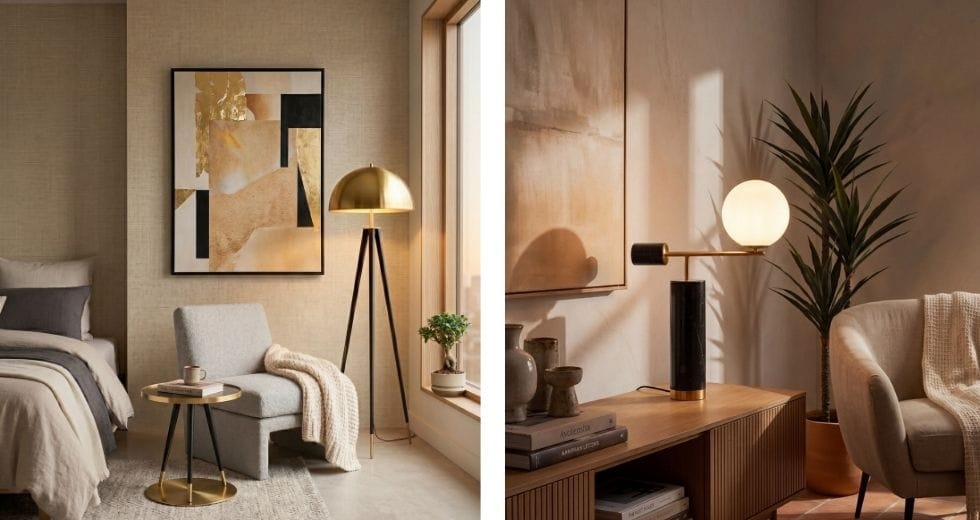
The height of the lamps is crucial in a reading nook. The main light, whether from a floor lamp or a sconce, should be at a height that comfortably illuminates the page of the book or the task being performed, generally between 1.40m and 1.60m from the floor, adjusting to the height of the person and the furniture. Avoid direct overhead lights that can create glare or uncomfortable shadows on the reading surface.
The light intensity for reading should be sufficient, oscillating between 300 and 500 lux in the work area, but it is important that it be a clear, flicker-free light. Opting for good quality LED bulbs with a neutral colour temperature (around 3500K-4000K) can be ideal for concentration, although many prefer a warm light (3000K) for a more relaxed atmosphere. At The Lumine you will find design lamps and modern lamps, such as the Modern Grey Arc Floor Lamp, perfect for creating your ideal reading nook with functionality and style.
Frequently Asked Questions about Choosing Lamps at The Lumine
What type of lamp is best for a small living room?
For a small living room, the ideal is to opt for lamps that do not saturate the space. A ceiling lamp such as a flush mount or a pendant lamp of contained size works well as general light. Adding a slim floor lamp or a table lamp in a corner can provide ambient light without clutter. Wall sconces are also an excellent option to maximise space.
What is the correct height for a living room lamp?
The height of ceiling lamps in the living room is usually between 2.10 and 2.30 metres from the floor. If it is a pendant lamp over a dining table in the living room, it should sit between 75-90 cm above the table. Floor lamps should be placed so that their light illuminates the desired area without dazzling, and table lamps, at the level of the sofa or chair.
How much light do I need in the bedroom?
The light intensity in the bedroom should be soft and relaxing. For general light, between 100 and 200 lux is sufficient. For tasks such as reading, a more focused light of 300-500 lux in the specific area is recommended. It is essential to use warm light bulbs (2700K-3000K) to promote rest.
Is it advisable to use design lamps in the entrance hall?
Absolutely! The hall is the perfect place to show off design lamps. An impactful pendant lamp or a console lit by a stylised table lamp can create a memorable first impression and give personality to your entrance. The key is that it harmonises with the rest of the decor.
What type of light is best for a reading nook?
For a reading nook, functional and direct light is needed. An articulated floor lamp or a directional sconce are ideal for focusing the light over the book. A light intensity of 300-500 lux in the reading area is recommended. The colour temperature can be neutral (3500K-4000K) for concentration or warm (3000K) for greater comfort.
What are warm light and neutral light lamps?
Warm light (2700K-3000K) has a yellowish tone, similar to candle light or an incandescent bulb, ideal for creating cosy and relaxing atmospheres in living rooms and bedrooms. Neutral light (3500K-4000K) is whiter and resembles daylight, being excellent for work areas, kitchens or bathrooms, where greater clarity and detail are required.
How can I create a decorative effect with lighting in my home?
You can create decorative effects using home lighting in several ways: employing design lamps as sculptural pieces, directing light towards architectural or decorative elements (accent lighting), creating layers of light with different types of lamps, or using indirect light to wash walls and ceilings, softening the atmosphere.
At The Lumine, we offer you a unique experience to choose lamps that suit every corner of your home, combining avant-garde aesthetics and functionality. Explore our collection of design lamps and modern lamps, and find the perfect solution for your home lighting. Transform your spaces with light.
Discover more at The Lumine: explore our table lamps and floor lamps.
Leave a Comment
Your email address will not be published. Required fields are marked *